Claude MCP
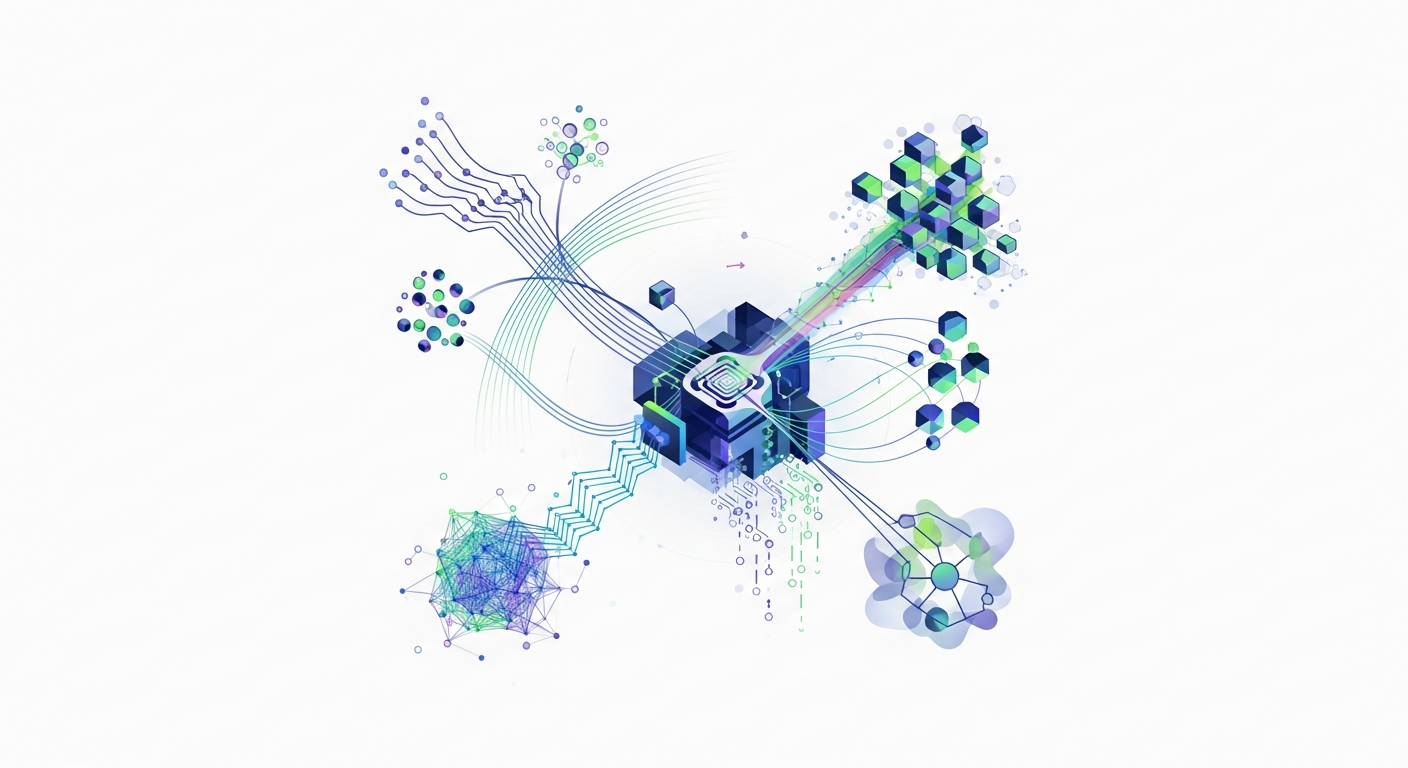
Anthropic's Model Context Protocol layer for connecting Claude and other agentic clients to external tools, knowledge sources, and local or hosted services.
Powers Claude integrations with tools
Recommended Fit
Best Use Case
Developers integrating AI tools and data sources through a standardized protocol for Anthropic's Claude ecosystem.
Claude MCP Key Features
Easy Setup
Get started quickly with intuitive onboarding and documentation.
Tool & MCP Layer
Developer API
Comprehensive API for integration into your existing workflows.
Active Community
Growing community with forums, Discord, and open-source contributions.
Regular Updates
Frequent releases with new features, improvements, and security patches.
Claude MCP Top Functions
Overview
Claude MCP is Anthropic's Model Context Protocol, a standardized framework that bridges Claude and other agentic AI clients with external tools, databases, APIs, and knowledge sources. Rather than forcing developers to implement custom integrations for each tool, MCP provides a unified protocol layer that abstracts the complexity of connecting diverse data sources and services to AI models. This approach eliminates vendor lock-in and enables seamless tool composition across the Anthropic ecosystem and beyond.
The protocol operates on a client-server architecture where MCP servers expose resources, tools, and prompts that Claude clients can discover and invoke. Developers define their integrations once as an MCP server, then any compatible client can leverage those capabilities without reimplementation. This reduces integration overhead dramatically and creates a composable foundation for building sophisticated AI agents that can interact with legacy systems, proprietary databases, real-time APIs, and local services uniformly.
Key Strengths
MCP's greatest strength is its abstraction of tool integration complexity. Instead of writing custom code to connect Claude to PostgreSQL, Slack, GitHub, or internal APIs, developers implement a single MCP server that exposes these integrations. The protocol handles serialization, error handling, and capability negotiation automatically. Claude then discovers and uses these tools contextually, understanding their schemas and constraints without hardcoded prompting tricks.
The framework includes a thriving ecosystem of pre-built servers for common use cases—database connectors, web scrapers, file systems, and SaaS integrations—that developers can fork and customize. The active community contributes servers regularly, and Anthropic maintains comprehensive documentation with interactive examples. Regular protocol updates ensure compatibility and introduce new capabilities like streaming resources and improved sampling parameters, keeping the framework current with evolving AI agent requirements.
- Standardized protocol eliminates custom tool integration code for each AI model
- Pre-built servers for PostgreSQL, SQLite, GitHub, Slack, and filesystem access
- Resource and prompt caching reduces latency and token consumption
- Bidirectional client-server communication enables real-time context updates
Who It's For
Claude MCP is essential for teams building multi-tool AI agents that interact with diverse data sources and services. It's particularly valuable for enterprises integrating Claude into legacy systems, developers creating internal tool ecosystems, and anyone building production AI applications that require reliable, standardized tool composition. If your workflow involves connecting Claude to multiple external services, databases, or local resources, MCP eliminates significant engineering overhead.
Teams already invested in the Anthropic ecosystem benefit most from MCP's native integration, but the protocol's vendor-neutral design means it's equally relevant for developers exploring multi-model AI agent architectures. Organizations prioritizing system reliability and composability—where AI agents need consistent access to tools regardless of the underlying model—will find MCP's standardization approach particularly compelling.
Bottom Line
Claude MCP represents a maturation of AI tooling infrastructure, shifting the complexity burden from developers to the protocol layer. By standardizing how agents discover and invoke tools, it enables building sophisticated multi-tool AI systems without the customization overhead that plagued earlier approaches. The framework is production-ready, supported by Anthropic, and backed by an active community contributing new servers and improvements continuously.
For developers serious about building scalable, maintainable AI agent systems, Claude MCP is the standard foundation to build upon. Its free pricing, developer-friendly API, and regular updates make it an accessible entry point for experimentation, while its architectural strengths support enterprise-grade deployments. The protocol's emphasis on composability and interoperability positions it as a foundational layer for the next generation of AI agent infrastructure.
Claude MCP Pros
- Eliminates custom integration code by standardizing how AI agents connect to tools and data sources through a single protocol
- Free to use with no licensing costs, making it accessible for startups and enterprises alike
- Pre-built servers for common integrations (PostgreSQL, SQLite, GitHub, Slack, filesystem) reduce setup time from days to hours
- Resource and prompt caching built into the protocol reduces token consumption and latency compared to repeated tool invocations
- Developer-friendly TypeScript/JavaScript SDKs with extensive examples and interactive documentation enable rapid prototyping
- Active community contributes new servers regularly, expanding the ecosystem of available integrations without waiting for official updates
- Vendor-neutral architecture allows the same MCP servers to work with multiple AI clients beyond Claude, protecting integration investments
Claude MCP Cons
- Requires understanding of the Model Context Protocol specification, which adds learning curve beyond basic Claude API usage
- Pre-built servers cover common use cases but rare or highly specialized integrations may require custom server development
- Limited official server ecosystem compared to mature alternatives like LangChain tools—many common integrations still require custom implementations
- Debugging tool invocation failures can be challenging without strong understanding of the protocol's JSON-RPC communication layer
- Production deployment requires managing additional server processes and infrastructure, adding operational complexity compared to simple API calls
- No built-in rate limiting or resource quotas per client, requiring manual implementation in production to prevent runaway token consumption
Get Latest Updates about Claude MCP
Tools, features, and AI dev insights - straight to your inbox.