Drizzle Kit shifts to tsx loader and adds Bun/Deno support, reducing module resolution friction for builders working across multiple JavaScript runtimes.
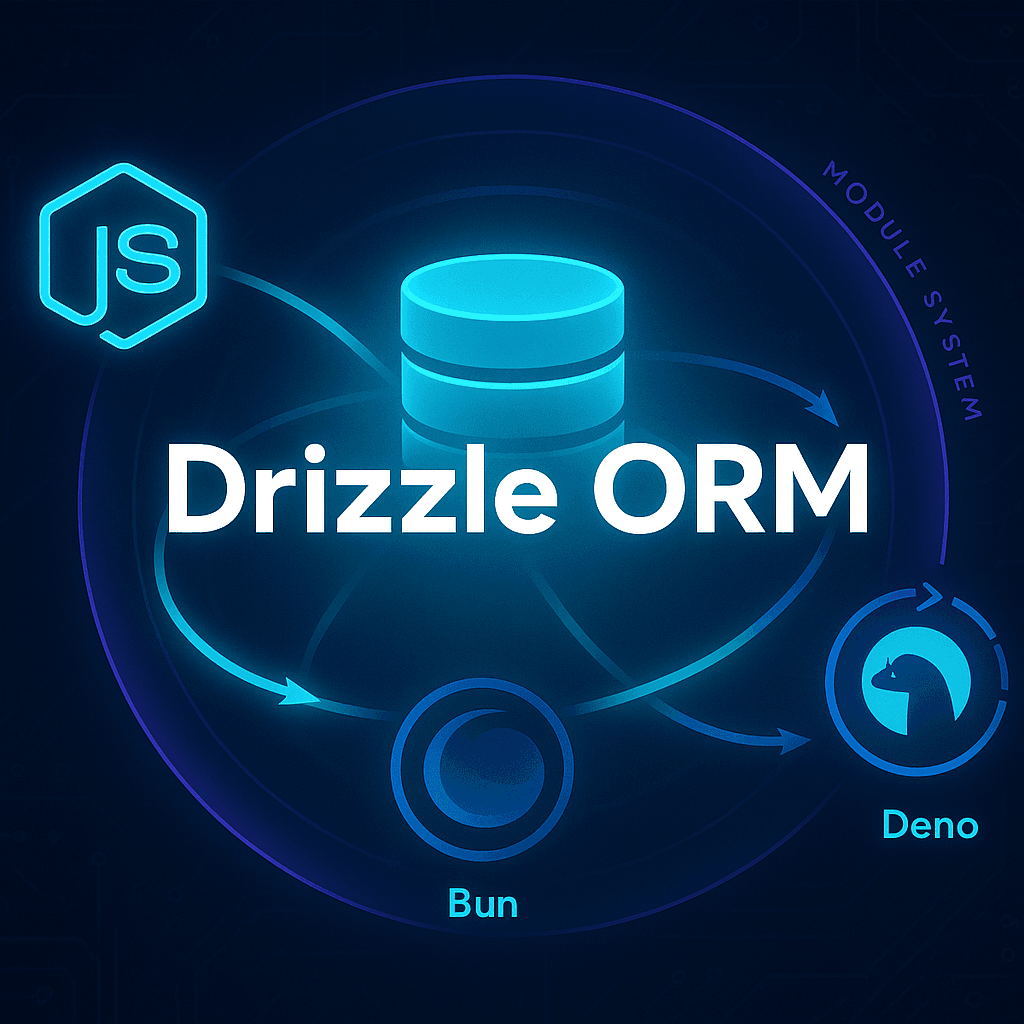
Simplified migrations across JavaScript runtimes with fewer module resolution headaches and clearer error reporting in production pipelines.
Signal analysis
industry sources tracked this release because it addresses a real pain point: esbuild-register couldn't reliably handle both ESM and CommonJS modules in development workflows. The shift to tsx loader solves this by providing a unified module resolution system that works across formats without requiring complex configuration.
This matters because your Drizzle migrations run during development and CI/CD pipelines - environments where module resolution errors kill productivity. The esbuild-register approach worked in most cases but would fail unpredictably when dealing with mixed module types or certain Node.js configurations. tsx handles this natively by intercepting the module loader at runtime, making it work regardless of your project's module setup.
For builders, this means less debugging of 'module not found' errors in your migration pipeline. Your drizzle-kit commands will now execute consistently whether you're using pure ESM, CommonJS, or a hybrid setup.
The addition of native Bun and Deno launch support signals that Drizzle is treating these runtimes as legitimate alternatives, not afterthoughts. Your migrations can now execute directly in Bun or Deno without Node.js shims or workarounds. This is significant because both runtimes have different module resolution systems - Bun uses its own compatibility layer, and Deno uses explicit URL imports.
What this means operationally: if your team runs Bun for development (faster startup, native TypeScript), your migrations work natively. Same with Deno if you're exploring that ecosystem. You're not locked into Node.js for your database operations. This reduces friction in polyglot development setups where different parts of your stack use different runtimes.
The implementation handles the runtime-specific quirks - Bun's require shim compatibility, Deno's permission model - so you don't have to. Your migration scripts work identically across runtimes, which simplifies CI/CD pipelines that might test against multiple JavaScript engines.
The upgrade to [email protected] improves string handling in migrations - this affects how your schema changes are serialized and parsed. While this sounds minor, string handling in ORM tools directly impacts the reliability of your generated SQL and migration formatting. Better string handling means fewer encoding issues, better Unicode support, and more predictable migration file output.
Enhanced non-TTY error reporting is a practical improvement for CI/CD environments. When drizzle-kit runs in GitHub Actions, GitLab CI, or other CI systems, it can't use interactive terminal features. Previously, error messages in non-TTY environments could be garbled or unhelpful. Now they're formatted clearly for log aggregation systems, making it easier to diagnose migration failures in automated pipelines.
These changes combine to improve the entire migration experience - from development loops where you're iterating schema changes, to production pipelines where clarity matters. The momentum in this space continues to accelerate.
Best use cases
Open the scenarios below to see where this shift creates the clearest practical advantage.
One concise email with the releases, workflow changes, and AI dev moves worth paying attention to.
More updates in the same lane.
Mistral Forge allows organizations to convert proprietary knowledge into custom AI models, enhancing enterprise capabilities.
Version 8.1 of the MongoDB Entity Framework Core Provider brings essential updates. This article analyzes the implications for builders.
The latest @composio/core update enhances Toolrouter with custom tool integration, expanding flexibility for developers.
