Lovable rolled out a major versioning system overhaul. Here's what changed, why it matters for your workflow, and how to adapt your build process.
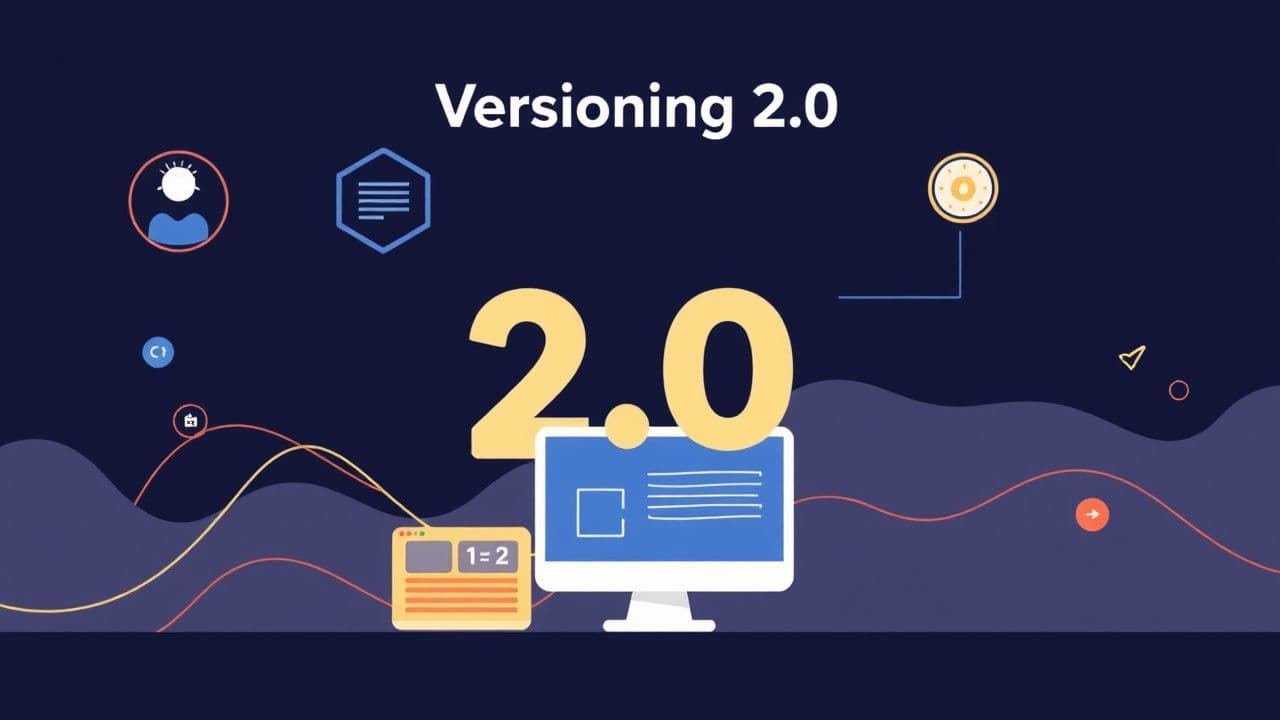
Versioning 2.0 decouples experimentation from stability, letting builders test features in parallel while maintaining production integrity.
Signal analysis
Lovable's Versioning 2.0 represents a fundamental restructuring of how the platform tracks, manages, and deploys app iterations. The system moves beyond basic version numbering into a more granular, flexible approach designed for teams and solo builders working across multiple simultaneous development tracks.
The core improvement: builders now have explicit control over version branching, snapshot creation, and rollback mechanics. Rather than linear version history, Versioning 2.0 enables non-linear development workflows where you can maintain multiple experimental branches, test variations independently, and merge changes with explicit conflict resolution.
Versioning directly impacts your ability to iterate safely and collaborate. The old model forced linear progression — each change built on the last, making it risky to experiment or maintain multiple feature branches. Versioning 2.0 eliminates that constraint.
For solo builders, this means you can maintain a stable 'production' version while simultaneously working on experimental features without the overhead of managing separate projects. For teams, it means clearer responsibility tracking, easier code reviews tied to specific versions, and the ability to run A/B tests where different user cohorts experience different app versions in production.
The change tracking improvement is particularly relevant for compliance and audit purposes. Financial apps, healthcare tools, and regulated software need detailed version history. Versioning 2.0 provides that visibility by default, not as an afterthought.
Lovable's investment in versioning reflects a broader industry shift. Low-code/no-code platforms are moving upstream into enterprise and team workflows. That requires robust version control — the non-negotiable foundation of professional development.
This update signals that Lovable is positioning itself as viable for teams with formal deployment processes, not just solo hobbyists. The emphasis on change tracking, branching, and rollback are the exact features demanded by organizations with CI/CD requirements and compliance frameworks.
This update requires intentional process changes. Versioning 2.0 is more powerful but also more complex than its predecessor. Builders who don't establish clear versioning conventions will end up with version sprawl — too many branches, unclear purpose, difficult merges.
Start by defining your version naming scheme and branch strategy. Document when you create new branches (per feature? per experiment? per user cohort?), what constitutes a snapshot vs. a full version release, and your rollback decision criteria. This taxonomy prevents confusion as your project grows.
Best use cases
Open the scenarios below to see where this shift creates the clearest practical advantage.
One concise email with the releases, workflow changes, and AI dev moves worth paying attention to.
More updates in the same lane.
Discover how to enable Basic and Enhanced Branded Calling through Twilio Console to enhance your brand's visibility.
Cohere has unveiled 'Cohere Transcribe', an open-source transcription model that enhances AI speech recognition accuracy.
Mistral AI has released Voxtral TTS, an open-source text-to-speech model, providing developers with free access to its capabilities for various applications.
