MICA introduces governance-first context management with provenance tracking and hash anchoring. A critical infrastructure layer for stateful AI agents is finally being standardized.
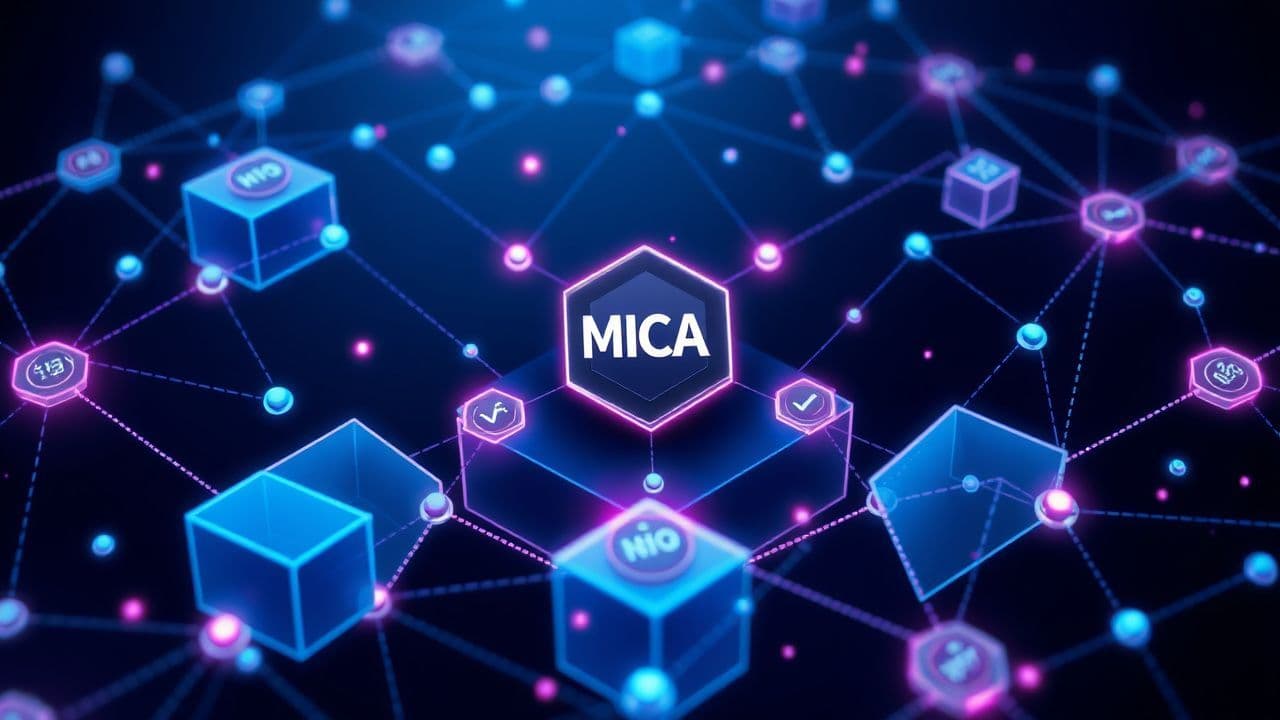
Builders can now implement auditable, verifiable context governance across agent systems instead of building ad-hoc solutions for each handoff and session.
Signal analysis
Here at Lead AI Dot Dev, we've watched builders struggle with a deceptively simple problem: how do you reliably hand off AI context between sessions? Most agents today treat context like a dumpster - throw memory in, hope it stays coherent, move on. MICA v0.1.5 changes that by introducing a governance schema that treats context as verifiable infrastructure. The release, documented at dev.to, addresses what happens when stateful AI systems need to maintain trust across handoffs, multiple agents, and long-running applications.
The core insight is that context shouldn't be schema-less. When an agent picks up where another left off, or when you're auditing what influenced a decision, you need provenance - a traceable record of where information came from, when it arrived, and what state it represented. Hash-anchored tracking means you can verify that context hasn't been tampered with or corrupted between sessions. This is table-stakes for production systems handling anything sensitive.
This isn't about better prompt engineering. This is about making context a managed resource with governance attached. Builders working on multi-agent systems, long-running automation, or compliance-heavy applications will recognize this immediately as the missing piece in their architecture.
If you're building agents that need to remember state reliably, MICA v0.1.5 gives you a framework instead of ad-hoc solutions. The governance layer sits between your raw context and your agent logic. You define scoring rules for context relevance, establish provenance chains that show where information came from, and anchor everything to hashes so you can detect drift.
The most immediate value is auditability. When a system makes a decision based on accumulated context, you can now trace exactly which context elements contributed to that decision. That matters for debugging, for compliance verification, and for understanding why an agent behaved unexpectedly. The hash-anchored design means you're not relying on logs or fuzzy approximations - the record is cryptographically verifiable.
Cross-session handoffs become predictable. Instead of hoping context serializes and deserializes correctly, MICA's schema ensures that context arriving in a new session is validated against its provenance record. If an agent or human modifies context between sessions, the hash mismatch is immediate and obvious. This is how you prevent silent corruption in long-running systems.
For teams managing multiple agents or complex automation pipelines, the governance schema creates a common language. One agent can score context as 'high-confidence recent' while another inherits that same context with full visibility into why it was scored that way. That coordination layer has been missing from most agent frameworks.
MICA's release reflects a broader market pattern we're seeing across AI tooling. The flashy problems - prompt optimization, model selection, token counting - those get solved first. But the unglamorous infrastructure problems - how do you manage state, verify integrity, audit decisions - those linger until someone finally builds the standardized layer. MICA is that move for context governance.
This trend suggests the market is maturing past the 'bolted-on context' phase. Early-stage AI applications worked around context problems with engineering fixes and workarounds. Production systems can't afford that fragility. As more builders move agents from prototype to production, standardized governance schemas become table-stakes. The fact that this is happening at the open infrastructure level (dev.to discussions and framework releases) rather than behind closed vendor APIs is significant - it means the problem is genuinely foundational, not vendor-specific.
What follows historically is consolidation around the leading schema. If MICA's approach resonates, you'll see agent frameworks, observability tools, and data pipelines adopting its governance model. That creates a cascade where the initial friction of adoption disappears - you'll be using MICA-compatible context because the rest of your stack expects it. We're watching a potential inflection point.
Thank you for listening, Lead AI Dot Dev
Best use cases
Open the scenarios below to see where this shift creates the clearest practical advantage.
One concise email with the releases, workflow changes, and AI dev moves worth paying attention to.
More updates in the same lane.
Cognition AI has launched Devin 2.2, bringing significant AI capabilities and user interface enhancements to streamline developer workflows.
GitHub Copilot can now resolve merge conflicts on pull requests, streamlining the development process.
GitHub Copilot will begin using user interactions to improve its AI model, raising data privacy concerns.
