OpenAI's bold vision includes robot taxes and public wealth funds to tackle economic disparities caused by AI. This could reshape how developers approach AI deployment in the workforce.
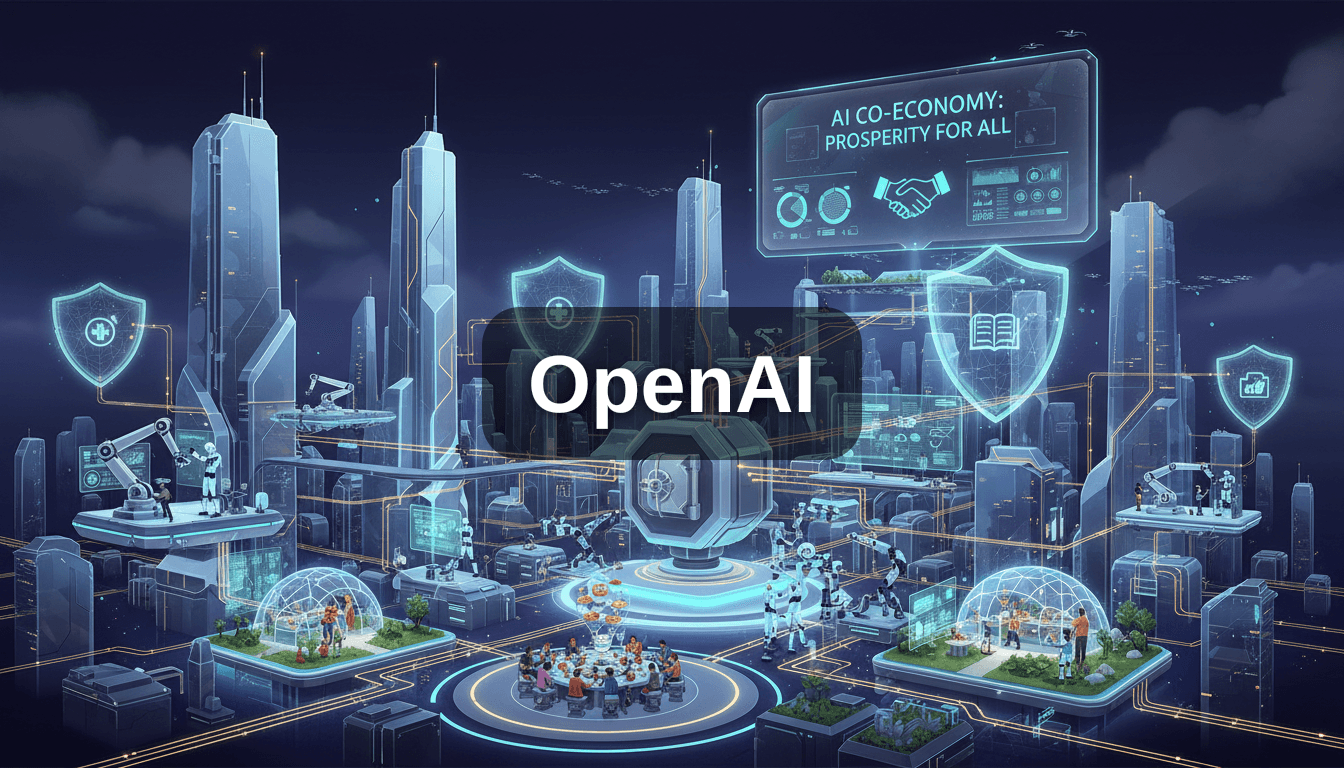
OpenAI's economic framework provides a lens for understanding policy directions that will shape AI deployment, workforce transition, and benefit distribution over the next decade.
Signal analysis
OpenAI has published a comprehensive economic policy framework proposing strategies for integrating AI into the broader economy. The document addresses workforce transition, benefit distribution, and regulatory approaches that could shape how AI impacts employment and economic growth. While not official policy, the framework reflects OpenAI's thinking about societal implications of advanced AI.
Key proposals include AI transition funds for worker retraining, profit-sharing mechanisms for AI-affected industries, and graduated automation taxes that incentivize gradual rather than abrupt workforce changes. The framework acknowledges that AI productivity gains should be broadly shared rather than concentrated among AI companies and their investors.
The timing coincides with increasing policy attention to AI economic impacts. Legislators worldwide are considering AI-related employment policy. OpenAI's framework positions the company as a thoughtful participant in policy debates while potentially shaping regulations in directions favorable to continued AI development.
Knowledge workers in automatable roles should pay attention. While predictions of AI job displacement vary widely, the policy discussion itself signals serious consideration of major workforce impacts. Understanding the policy landscape helps individuals make career decisions about skill development and industry positioning.
Tech companies building AI applications need to anticipate regulatory requirements. Potential automation taxes or worker transition obligations could affect build vs buy decisions and deployment timelines. Companies integrating AI should track policy developments that could change the economics of automation.
Policy professionals and executives need to engage with AI economic frameworks proactively. The policies that emerge will reflect the loudest voices in the debate. Organizations affected by AI regulation should participate in shaping it rather than reacting to finished legislation.
The AI Transition Fund proposal suggests federally-backed programs to retrain workers displaced by AI automation. Similar to trade adjustment assistance for offshoring-affected workers, these funds would support education, career services, and income support during transitions. Implementation would require new legislation and funding appropriations.
Profit-sharing mechanisms would require companies deploying AI at scale to share productivity gains with affected workers or communities. Proposals range from mandatory equity grants to community development funds. The challenge is defining thresholds and measuring 'AI-driven' versus other productivity gains.
Graduated automation taxes would create higher tax rates for rapid workforce reduction, incentivizing companies to implement automation gradually. The theory is that gradual change allows workforce adaptation while abrupt displacement creates concentrated harms. Implementation challenges include defining 'automation' and avoiding gaming of thresholds.
The EU AI Act focuses on risk classification and compliance requirements rather than economic distribution. OpenAI's framework is complementary, addressing economic impacts the EU Act doesn't cover. Both may shape US policy, with the EU providing regulatory precedent and OpenAI providing economic frameworks.China's approach emphasizes state control of AI development and directed deployment. Economic impacts are managed through state planning rather than market mechanisms. OpenAI's framework assumes market economics with policy interventions, contrasting with direct state management.
Congressional proposals vary widely, from AI research moratoriums to universal basic income funded by AI taxes. OpenAI's moderate proposals position between extremes, potentially finding broader support. The framework's emphasis on managed transition rather than prohibition may appeal to legislators seeking compromise.
Expect AI economic policy to develop rapidly over the next 24 months. The policy window is opening as AI capabilities become undeniable and economic impacts measurable. Companies that engage early in policy formation gain influence over outcomes.
International coordination remains uncertain. Different national approaches to AI economics could create competitive dynamics - countries with lighter regulation might attract AI development while risking worker impacts. OpenAI's framework implicitly assumes coordinated policy that prevents regulatory arbitrage.
The practical implication for developers is awareness more than immediate action. Policy changes take years to implement. But career decisions, company strategy, and investment choices should account for the policy direction. AI development will continue regardless, but the economic and regulatory context will shape deployment patterns.
Best use cases
Open the scenarios below to see where this shift creates the clearest practical advantage.
One concise email with the releases, workflow changes, and AI dev moves worth paying attention to.
More updates in the same lane.
Startup Battlefield 200 is back, offering startups a shot at $100K, VC access, and TechCrunch coverage. Applications close May 27.
Zero Shot, a new venture capital fund with OpenAI roots, plans to raise $100 million. This could reshape the AI investment landscape, impacting developers and startups alike.
Rocket's new AI is revolutionizing the consulting landscape by offering McKinsey-style reports at a fraction of the cost, combining strategy and competitive intelligence for developers.
