ChatGPT has unveiled new integrations with popular apps like DoorDash, Spotify, and Uber, revolutionizing the way developers can enhance their applications. Explore the implications and use cases of these powerful integrations.
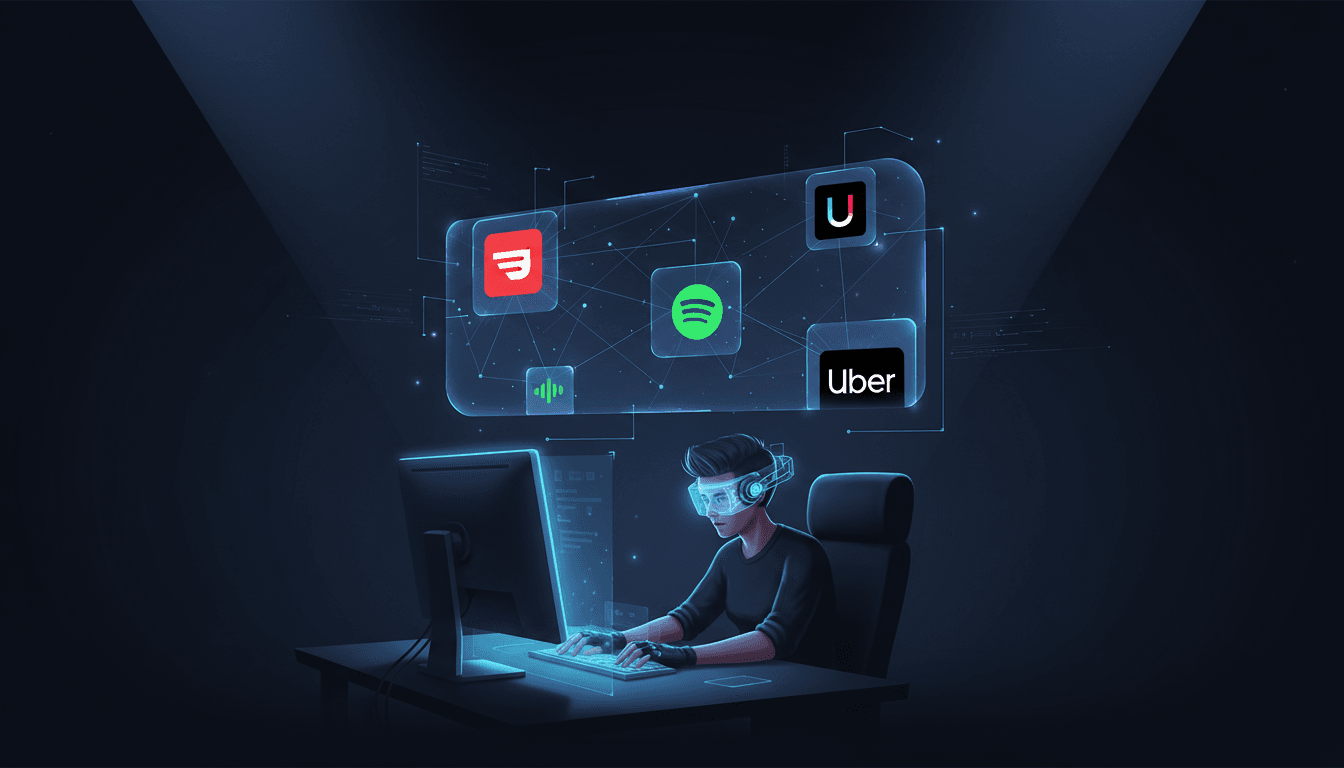
ChatGPT app integrations transform AI from isolated chat into connected workflow hub, enabling applications to provide context and execute actions through conversational interface.
Signal analysis
OpenAI has expanded ChatGPT's app integration capabilities, enabling developers to build deeper integrations between ChatGPT and external applications. The new APIs allow applications to exchange context with ChatGPT, trigger actions based on conversation, and maintain state across sessions. This moves beyond simple GPT actions to genuine bidirectional integration.
The technical implementation provides OAuth-based authentication, webhooks for conversation events, and a context API for sharing application state. Applications can push context to ChatGPT mid-conversation and receive callbacks when users take relevant actions. This creates seamless workflows spanning ChatGPT and integrated applications.
Integration patterns cover common use cases: CRM systems updating ChatGPT with customer context, project management tools receiving task assignments from conversations, code repositories triggering from ChatGPT-generated specifications. The APIs are designed for these patterns while remaining flexible for novel applications.
SaaS developers can create differentiated ChatGPT experiences. Rather than generic GPT capabilities, integrated applications provide specialized context that makes ChatGPT more useful for their users. A CRM with ChatGPT integration offers AI capabilities competitors can't match without similar investment.
Enterprise users gain AI capabilities connected to their actual work context. ChatGPT with integration to your CRM, project management, and documentation becomes a productivity tool that understands your specific workflows. The AI bridges between applications rather than being another disconnected tool.
Automation builders can orchestrate complex workflows through conversation. Instead of programming automation rules, describe desired behaviors to ChatGPT which triggers appropriate integrations. This democratizes automation beyond those who can code explicit workflows.
Start with the ChatGPT Integration SDK: `npm install @openai/chatgpt-integrations`. Register your application in the OpenAI developer portal to get OAuth credentials. Your app must implement OAuth flows allowing users to authorize ChatGPT access to their application data.
Implement the context API to push relevant state to ChatGPT. When users work in your application, push context summaries to their ChatGPT session: `await client.pushContext({ type: 'customer', data: customerProfile })`. ChatGPT receives this context and can reference it in conversation without users re-explaining.
Subscribe to conversation webhooks to receive callbacks for relevant actions. Register handlers for events like task creation, query execution, or content generation. When users ask ChatGPT to perform actions in your application, webhooks deliver the action payload for your application to execute: `client.onAction('create_task', async (payload) => { await createTask(payload); })`.
Traditional APIs require developers to build AI capabilities themselves. ChatGPT integrations delegate AI to OpenAI while focusing on domain-specific context and actions. This reduces AI complexity for application developers while providing better AI capabilities than most could build independently.
The integration model centralizes conversation in ChatGPT rather than distributed across applications. Users learn one interface - ChatGPT - and integrate it with multiple tools. This differs from each application having its own AI chat interface. Centralization simplifies user experience but creates OpenAI dependency.
Microsoft Copilot offers similar integration patterns within Microsoft 365. For organizations standardized on Microsoft, Copilot integrations may be more natural. ChatGPT integrations excel for diverse tool environments beyond Microsoft's ecosystem.
ChatGPT may evolve toward general work hub rather than chat assistant. As integrations deepen, the pattern shifts from 'ask ChatGPT questions' to 'work through ChatGPT.' Applications become context providers and action handlers while ChatGPT orchestrates. This is a significant platform strategy shift.
Integration quality will differentiate applications. Generic SaaS with shallow ChatGPT integration loses to competitors with deep, contextual integration. AI integration capability becomes competitive moat. Expect talent competition for developers who can build effective integrations.
The dependency risk is real. Applications relying on ChatGPT for core functionality are dependent on OpenAI's platform decisions. OpenAI could compete with integrated applications or change pricing dramatically. Factor platform risk into integration investment decisions.
Best use cases
Open the scenarios below to see where this shift creates the clearest practical advantage.
One concise email with the releases, workflow changes, and AI dev moves worth paying attention to.
More updates in the same lane.
Cursor introduces self-hosted cloud agents, empowering developers with flexibility and control over their AI tools. Discover how this innovation can transform your development workflow.
Cursor's Warp Decode feature enhances AI-driven code interpretation, streamlining development workflows and improving productivity for developers. Discover how this innovation reshapes coding practices.
Together AI has announced the general availability of Instant Clusters, a new feature that streamlines AI model training and deployment. This innovative tool promises to enhance productivity and collaboration among developers working on AI projects.
