Zed adds AI-driven merge conflict resolution and branch diff mentions. This shifts conflict handling from manual to automated—test it now to evaluate impact on your workflow.
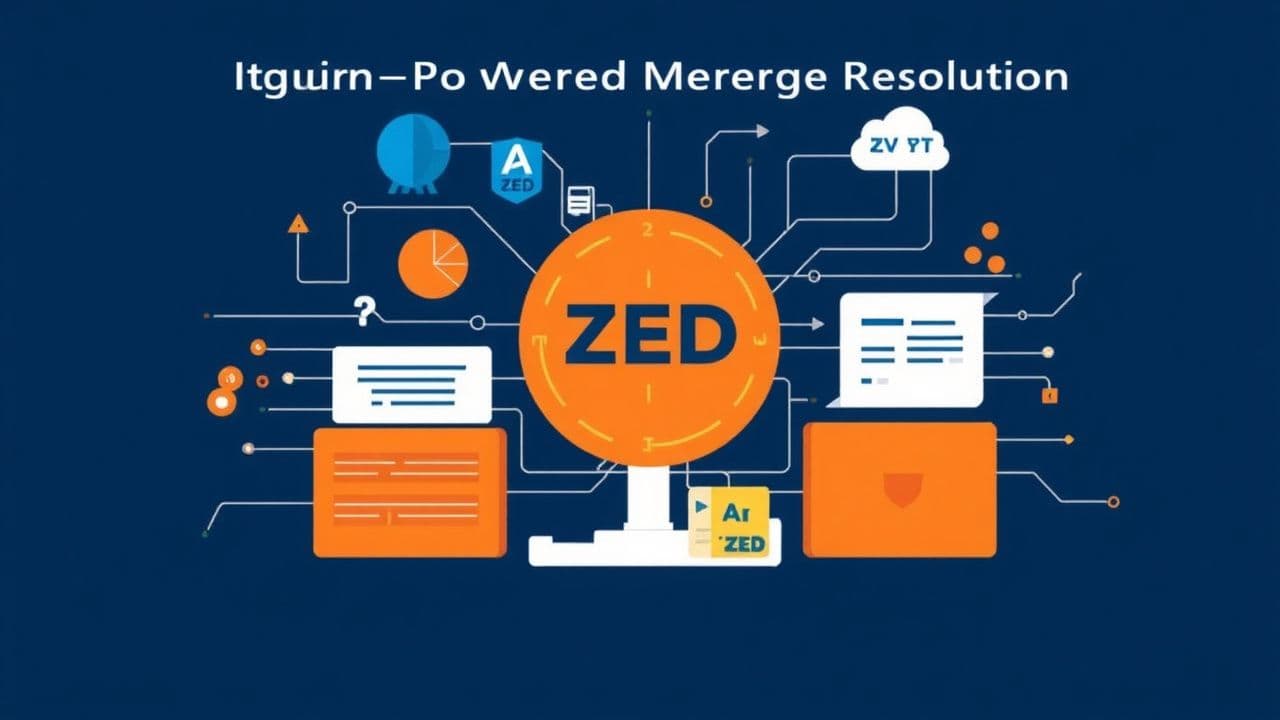
Reduce merge conflict handling time and streamline agent-assisted code review by keeping context and conflict resolution inside your editor.
Signal analysis
Zed's latest preview adds two capabilities targeting collaborative development friction: automated merge conflict resolution via the agent, and @-mention syntax for branch diffs. The merge conflict feature lets you invoke the agent to analyze conflicting changes and propose resolutions directly in the editor. The branch diff mention (@branch-diff) injects all changes since main into your agent context—useful for code review, documentation, or context-aware assistance.
Neither feature is revolutionary in isolation. Conflict resolution tools and diff-based context exist across IDEs. What matters here is integration—both live in Zed's editor, reducing context switching and friction in the feedback loop between coder and machine.
Merge conflicts are a cost multiplier in teams—they interrupt flow, require context switching, and often escalate into lengthy reviews. An agent that can propose resolutions saves time, but only if builders trust its decisions. The real test is whether conflict proposals are good enough to accept or significantly reduce manual rework.
The branch diff mention is more nuanced. It's a UX efficiency play. Instead of pasting diffs into chat or manually reviewing changes, you reference them inline. This matters most for teams using agents for code review, changelog generation, or pull request summaries—scenarios where the agent needs full context of changes.
This is preview software. Agent-based conflict resolution works well for straightforward cases—independent file changes, non-overlapping logic modifications—but struggles with semantic conflicts or business logic collisions. Teams with complex codebases should expect false positives and will need to review agent suggestions carefully.
The @branch-diff mention is context-aware only if your agent understands your codebase structure. Zed's agent is local-first and doesn't inherently understand your architecture. This means diff mentions are most useful for summary tasks (changelog generation) rather than deep architectural decisions.
If you use Zed, switch to preview and test both features on a non-critical branch. Run the agent on a merge conflict in a feature branch, capture the resolution proposal, and compare it against what you would have written manually. Track how often you accept, reject, or modify suggestions. This is your conversion metric.
For teams considering Zed adoption: treat this update as a signal that the editor is maturing toward agent-native workflows. If conflict resolution and contextual mentions are priorities for your team, this moves Zed up the evaluation list. However, don't adopt the editor solely for these features—evaluate the full experience first.
If you're building tools that interact with diffs or conflict resolution, watch how Zed implements this. The @-mention pattern for context injection is a UX model worth studying for your own tools.
Best use cases
Open the scenarios below to see where this shift creates the clearest practical advantage.
One concise email with the releases, workflow changes, and AI dev moves worth paying attention to.
More updates in the same lane.
Discover how to enable Basic and Enhanced Branded Calling through Twilio Console to enhance your brand's visibility.
Cohere has unveiled 'Cohere Transcribe', an open-source transcription model that enhances AI speech recognition accuracy.
Mistral AI has released Voxtral TTS, an open-source text-to-speech model, providing developers with free access to its capabilities for various applications.
